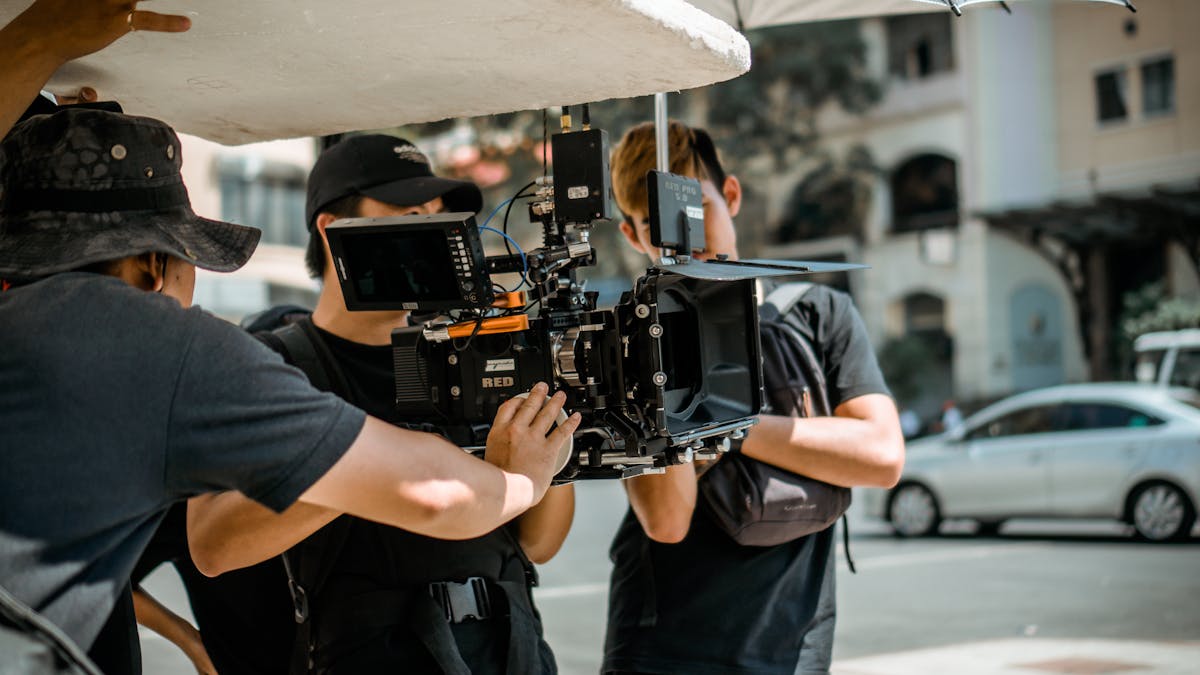
A client asks for your day rate. You give them a number that feels right. They say yes immediately, which means you probably left money on the table. Or they say it is too high, and you have no data to justify it. Setting a day rate is not about guessing what clients will pay. It is about calculating what your business needs to survive, then comparing that floor to what the market bears. Use our Video Production Day Rate Calculator to calculate your minimum day rate from your costs, billable days, and target income.
What Is a Day Rate in Video Production?
A day rate is the flat fee a videographer charges for one day of production work, typically 8 to 10 hours on set. It covers the shooter's time, standard equipment, and basic pre-production preparation. It does not include post-production, additional crew, specialized gear, travel expenses, or licensing fees. Those are line items billed separately.
In 2026, day rates remain common for production work, but project flat fees have overtaken day rates as the dominant pricing model. According to aggregated 2026 data from FreelanceDesk, 31 percent of US freelance videographers now price by project flat fee, compared to 28 percent who use day rate only. Hybrid pricing, which combines a day rate for production with a project flat fee for post-production, generates 64 percent higher median annual revenue than day-rate-only pricing ($118,000 versus $72,000).
The Formula: How to Calculate Your Day Rate
Your day rate should be calculated from your business costs, not pulled from a competitor's website. The formula:
Minimum Day Rate = (Monthly Business Costs + Target Monthly Take-Home) / Realistic Billable Days Per Month
Step-by-Step Example
A mid-level freelance videographer in Denver tracks their monthly costs:
| Cost Category | Monthly Amount |
|---|---|
| Target take-home pay | $6,000 |
| Software and subscriptions (Adobe, Frame.io, music libraries) | $450 |
| Camera and gear replacement reserve | $400 |
| Health insurance | $380 |
| Liability insurance | $120 |
| Tax reserve (self-employment plus income) | $1,800 |
| Marketing and website | $300 |
| Retirement contribution | $500 |
| Total monthly business output | $9,950 |
She estimates 10 billable production days per month. The rest of her time goes to post-production, admin, business development, and unpaid project scoping.
Minimum Day Rate = $9,950 / 10 = $995
Her absolute floor is $995 per day. Anything below that means she is losing money over the year, even if each individual gig feels profitable. She rounds to $1,200 to build in a profit margin and buffer for slow months.
What Do the Numbers Mean?
2026 market data shows clear day rate bands by experience tier. These figures are aggregated from multiple pricing studies and job board data sampled in early 2026.
| Experience Tier | Years | Day Rate Range | Median Day Rate |
|---|---|---|---|
| Beginner | 0 to 2 | $400 to $1,000 | $700 |
| Mid-level (solo) | 2 to 5 | $1,000 to $2,500 | $1,650 |
| Senior (solo) | 5 to 10 | $2,500 to $4,000 | $3,200 |
| Expert / DP-led crew | 10+ | $4,000 to $8,000+ | $5,500 |
Day rates vary significantly by specialty. The same senior-level videographer can charge very different rates depending on the type of work:
| Specialty | Senior Median Day Rate |
|---|---|
| Commercial / broadcast | $4,500 to $6,500 |
| DTC / SaaS brand content | $3,000 to $5,000 |
| Corporate / event | $2,500 to $4,000 |
| Documentary | $2,000 to $4,500 |
| Wedding (high-end) | $2,500 to $5,500 |
| Wedding (standard) | $1,500 to $3,000 |
Geography matters too. Major metros like New York and Los Angeles typically command 30 to 60 percent higher rates than the national median. Rural markets run 20 to 30 percent below.
Real-World Example
A senior videographer in Chicago specializes in corporate interview and testimonial content. He currently charges $1,500 per day and books about 12 days per month, generating $18,000 in monthly production revenue. After post-production work (included in his day rate), his effective hourly rate across all working hours is approximately $42 per hour.
He runs the calculation:
- Monthly business costs including target take-home: $11,200
- Realistic billable days: 12
- Minimum day rate: $11,200 / 12 = $933
His current rate of $1,500 clears the floor, but he is leaving margin on the table. He compares his rate to the 2026 senior median of $3,200 and the corporate specialty range of $2,500 to $4,000. He is pricing at the bottom of the senior range despite having 7 years of experience and a strong portfolio.
He raises his day rate to $2,500 and transitions to hybrid pricing: $2,500 per production day plus a flat $3,500 for post-production on standard corporate testimonial projects. His per-project revenue goes from $1,500 (day rate with edit included) to $6,000 (day rate plus post flat fee). He loses one repeat client who balks at the increase but replaces the work within two months at the new rate. His annual revenue increases by approximately 60 percent.
Project Pricing vs Day Rate: When to Use Each
The Bureau of Labor Statistics reports that the median annual wage for camera operators was $58,740 in May 2024, with the top 10 percent earning over $102,000. Freelance videographers who price strategically can exceed those figures, but only if they move beyond day-rate-only pricing.
| Pricing Model | Best For | When to Avoid |
|---|---|---|
| Day rate only | Open-ended engagements, multi-day corporate coverage, retainer work | One-off deliverables where scope is clear |
| Project flat fee | Defined deliverables (brand video, testimonial, social ad) | Vague scopes that tend to expand |
| Hybrid (day + post flat) | Most corporate and brand work | Pure event coverage with no post |
| Hourly | Additional revisions, overtime, open-ended consulting | Production work (clients prefer fixed costs) |
| Retainer | Ongoing content needs (monthly social, church, nonprofit) | One-off projects |
Common Mistakes to Avoid
Quoting a day rate that includes post-production. This is the single most common pricing mistake. A day rate covers production. Post-production is a separate phase with its own time, software, and creative demands. Bundling post into the day rate means you are effectively working for free during editing. Quote production and post as separate line items.
Not accounting for non-billable time. You cannot bill 20 days per month. Between scoping, admin, marketing, travel, equipment maintenance, and business development, 10 to 12 billable production days per month is realistic for most freelancers. Calculate your day rate based on realistic billable days, not calendar days.
Forgetting kit fees and expenses. Your day rate covers your time and standard gear. Specialized equipment (cinema lenses, drones, additional lighting packages, audio kits) should be billed as a kit fee, typically $200 to $800 per day depending on the gear. Travel, parking, meals, and lodging are expenses billed separately at cost.
Underpricing to win the job. If a client accepts your rate without negotiation, you priced too low. If they push back, you are in the right range. A 10 to 15 percent discount for a repeat client or a large multi-day project is reasonable. Discounting your day rate by 40 percent to win a one-off gig sets a precedent and devalues your market position.
Related Tools on ProfessionCalculators.com
- Photography Session Pricing Calculator for still photography session pricing
- Equipment Depreciation Calculator to calculate gear replacement reserves for your day rate calculation
- Video Ad Production Cost Calculator for pricing social and broadcast ad productions
- Licensing and Usage Fee Calculator to add licensing fees on top of your day rate
Frequently Asked Questions
What is a realistic freelance videographer day rate in 2026?
The median US freelance videographer day rate in 2026 is $1,650 for mid-level solo shooters, $3,200 for senior solo shooters, and $5,500 for expert or DP-led crew work. Beginner rates start around $700 per day. Commercial and broadcast specialties command the highest rates, with senior medians of $4,500 to $6,500 per day.
Should I charge by day rate or project flat fee?
Use project flat fees for defined deliverables where the scope is clear. Use day rates for open-ended or multi-day engagements. The most profitable model in 2026 is hybrid pricing: a day rate for production plus a flat fee for post-production. This model generates 64 percent higher median annual revenue than day-rate-only pricing.
What does a day rate include?
A standard day rate includes 8 to 10 hours of production time, your standard camera and audio package, basic lighting, local travel, and reasonable pre-production preparation. It does not include post-production, additional crew, specialized equipment, travel expenses, licensing fees, or overtime. Define what your day includes in your quote.
How many billable days can I expect per month?
Most freelance videographers bill 8 to 12 production days per month. The remaining time goes to post-production, client communication, scoping new work, admin, equipment maintenance, and business development. Calculate your day rate based on realistic billable days, not your total available working days.
How do I raise my day rate without losing clients?
Raise your rate in increments of 20 to 30 percent, not 100 percent. Announce the increase 30 to 60 days in advance. Frame it as a rate update, not an apology. Expect to lose some clients. The clients who leave were paying below your value, and the new rate will attract clients who respect your positioning. Most freelancers who raise rates find that revenue increases even as client count drops, because the higher rate compensates for fewer bookings.
Conclusion
Your day rate should be calculated from your business costs and target income, not copied from a competitor. Calculate your monthly output, divide by realistic billable days, and compare the result to 2026 market benchmarks for your experience tier and specialty. If you are still bundling post-production into your day rate, separate it immediately. The Video Production Day Rate Calculator handles the cost-based calculation, but the market data tells you whether your number is competitive. Price to your tier, quote production and post separately, and do not be afraid to lose a client who was never paying you enough.
Put These Numbers to Work
Stop doing mental math on important financial decisions. Use our profession-specific calculators to get precise answers in seconds.
Browse All CalculatorsKeep Reading
 Photography & Videography
How to Price Photography Prints in 2026: Lab Costs, Markups, and Margin Math
Calculate retail print prices from lab costs using 2026 pricing benchmarks. See markup multipliers for canvas, metal, and fine art paper with worked profit examples.
 Real Estate
BRRRR Strategy Explained: Step-by-Step Real Estate Investment Guide
Learn how the BRRRR method works for real estate investors. See a full deal example with numbers, refinancing math, and risk analysis for buy-rehab-rent-refinance-repeat.
 SaaS
SaaSChurn Rate vs. Retention Rate: SaaS Metrics Formulas and Benchmarks
Understand the difference between churn rate and retention rate for SaaS companies. Includes formulas, calculation examples, and industry benchmarks by company stage.
 Personal Finance
Debt-to-Income Ratio Explained: How DTI Affects Mortgage Approval
Calculate your debt-to-income ratio for mortgage qualification. Learn the 43% DTI limit, front-end vs back-end ratios, and how to lower your DTI before applying.
Try the Calculators
Video Production Day Rate Calculator
Build a full-day video production rate from crew costs, equipment rental, post-production editing, and travel using 2026 freelance and production company benchmarks.
Photography Session Pricing Calculator
Calculate profitable session rates based on time, editing hours, equipment costs, overhead, and 2026 market rates for portrait, headshot, event, and commercial photography.
Equipment Depreciation Calculator
Calculate camera gear depreciation schedules using straight-line and Section 179 methods with 2026 IRS rules for photography and videography equipment write-offs.
Video Ad Production Cost Estimator
Estimate 15, 30, and 60 second commercial production costs by tier (DIY, indie, professional) including pre-production, filming, post-production, talent, music, graphics, and location fees.